
March 25, 2025
Marsh River Cooperative
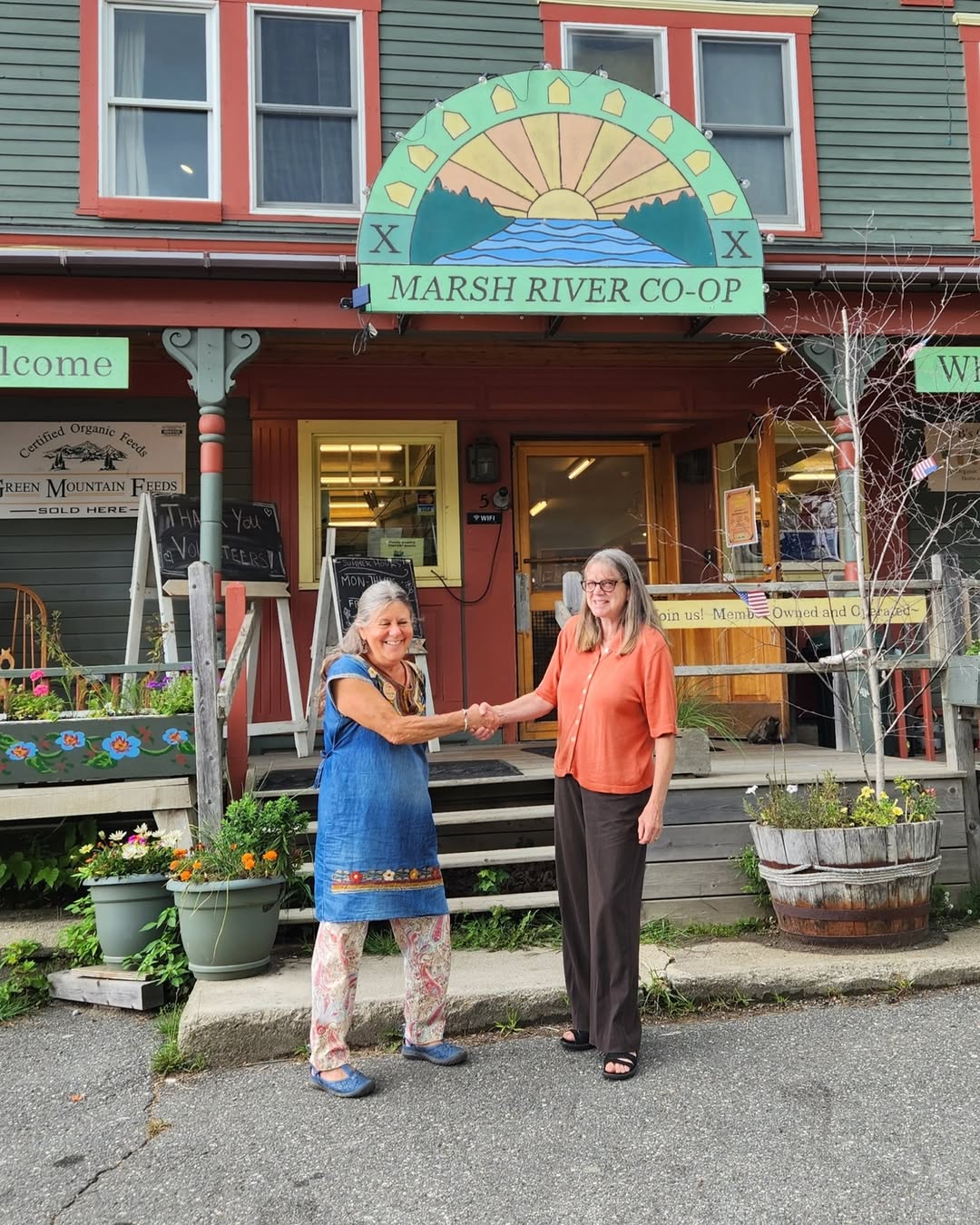
Marsh River Co-op is the happiest little store from the outside, bright and colorful, and stocked with so much of what we love: good, local food. Behind this cheerful storefront is also a business making smart decisions for long-term sustainability. The co-op’s transition to solar energy demonstrates their commitment not only to environmental stewardship but also to financial resilience in a challenging retail landscape. Their story shows how renewable energy can work hand-in-hand with community-centered business models, creating both economic and ecological benefits that ripple throughout rural Maine.

Describe your business in one sentence.
A small Agricultural and Food Co-op in Brooks, Maine.
What made you take the leap to solar? Why is it important to you?
While switching to renewable energy was one of our goals, the primary reason was to help with our increased energy costs.
How has solar energy impacted your business so far? How do you see it impacting your business going forward?
A lot of our membership/customers appreciate that we are getting a good portion of our energy from renewable resources. It has also saved us approximately $5,000 in the first year of operation. This is net savings including the solar loan and insurance costs for the array.
What impacts do you feel your transition to solar energy has had on your larger community?
I don’t believe it has a large impact in our community except that the reduction in our overhead costs allows our operations to continue, and as an organization we have an impact in the community.
Would you recommend solar energy to other business owners? Why or why not?
I would, depending on the circumstances. I think for high energy users like our business, generating our power on site can have significant financial and environmental advantages. That being said, it can be quite the undertaking and depending on the capabilities of the business might not be in their best interest. I think it’s important for a business to understand what it is getting into as a process.
How did CEI become a part of your solar energy transition?
CEI was recommended to me by the folks at the Cooperative Fund as possibly having greater financial resources to help with our loan.
Were there any barriers/challenges you faced in transitioning to solar energy? How did working with CEI help you overcome those barriers?
The greatest barrier was definitely general costs not associated with the actual loan for the solar array. We kept getting hit with unexpected needs (upgrading the structure where the panels went, increased insurance costs, origination fees, etc.).
The second greatest barrier was timing. Because of the timeline when we decided to move forward with the actual install, there was a significant amount of coordination to ensure that our installer, CEI, and REAP grant were all on the same page at the same time. We came down to the wire more than once moving on this project, which was extremely difficult.